Product Design
Sports Technology / Software
Level Up Sports Recruiting
Role
Lead Product Designer
Team
Myself , 2 engineers, 1 Stakeholder
Tools
Figma, Miro, Replit, Github
Platform
Web, iOS, Android
Some details and visuals have been simplified or modified to respect confidentiality and proprietary information. The work shown represents my role and contribution to the project.
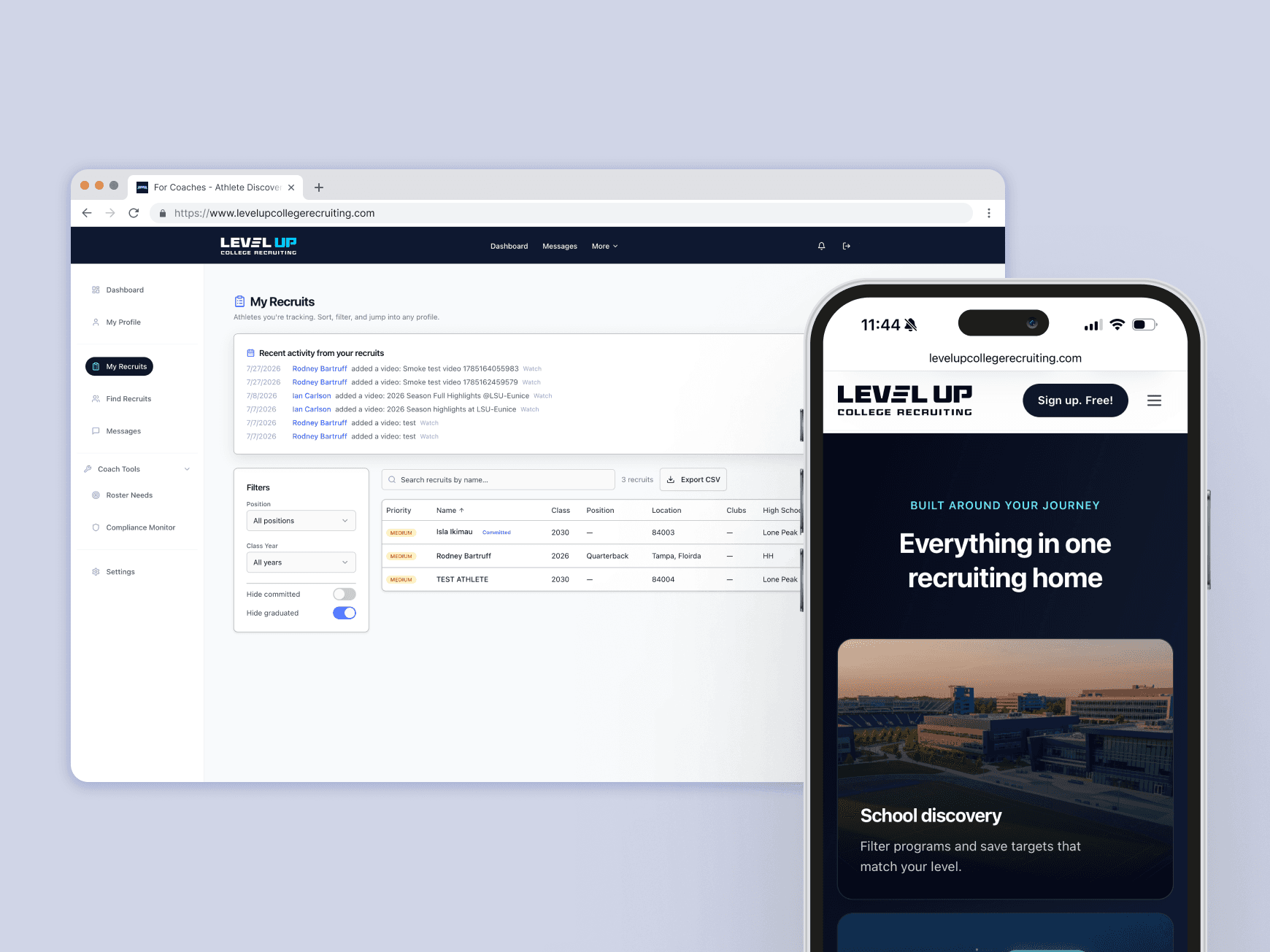
Changing the game
Level Up Recruiting’s platform buried its most valuable actions under data tables, so athletes stalled out and coaches churned. I led the redesign of the end-to-end experience — from research through a shared component library — rebuilding it around three core jobs: discover schools, share results, and track conversations. The new platform shipped across web and mobile and became the team’s design foundation.
+34% athlete profile completion
-41% time for coaches to shortlist a recruit
One shared component library across web and mobile

The Problem
Recruiting season is short and unforgiving: athletes needed to build credible profiles fast, and coaches needed to evaluate talent without digging through spreadsheets. The existing product was technically capable but organized around the database, not the user. Constraints shaped everything — a small engineering team, a hard pre-season deadline, and legacy data models we couldn’t rewrite mid-flight.
My Role
I led product design end to end: research synthesis, information architecture, the My Results dashboard, and the component library. Engineering owned the data migration and I contributed to — but didn’t own — the pricing and packaging decisions. The calls I was personally responsible for: restructuring navigation around user jobs, and pushing back on a feature-parity launch in favor of a focused core.
Research & Insights
I interviewed athletes, parents, and coaches and reviewed funnel analytics. Three findings drove the direction: athletes abandoned profiles when value wasn’t visible within the first session; coaches judged credibility by verified results, not bios; and parents were the hidden decision-makers on paid plans.
Exploration & Design Process
I explored three directions — a feed-first social model, a dashboard-first data model, and a guided checklist hybrid. The social model tested well for engagement but risked credibility; the pure dashboard felt like the old product. We converged on the hybrid: a guided recruiting home with verified results at the center. Wireframes went through weekly reviews with engineering to keep the legacy data constraints honest.
Validation & Testing
Moderated tests in Maze with 12 athletes and 6 coaches validated the new My Results flow. I was wrong about one thing: I’d assumed athletes wanted rich customization, but testing showed it created anxiety — they wanted guardrails. We cut the customization layer and completion rates in testing jumped immediately.
Final Solution & Impact
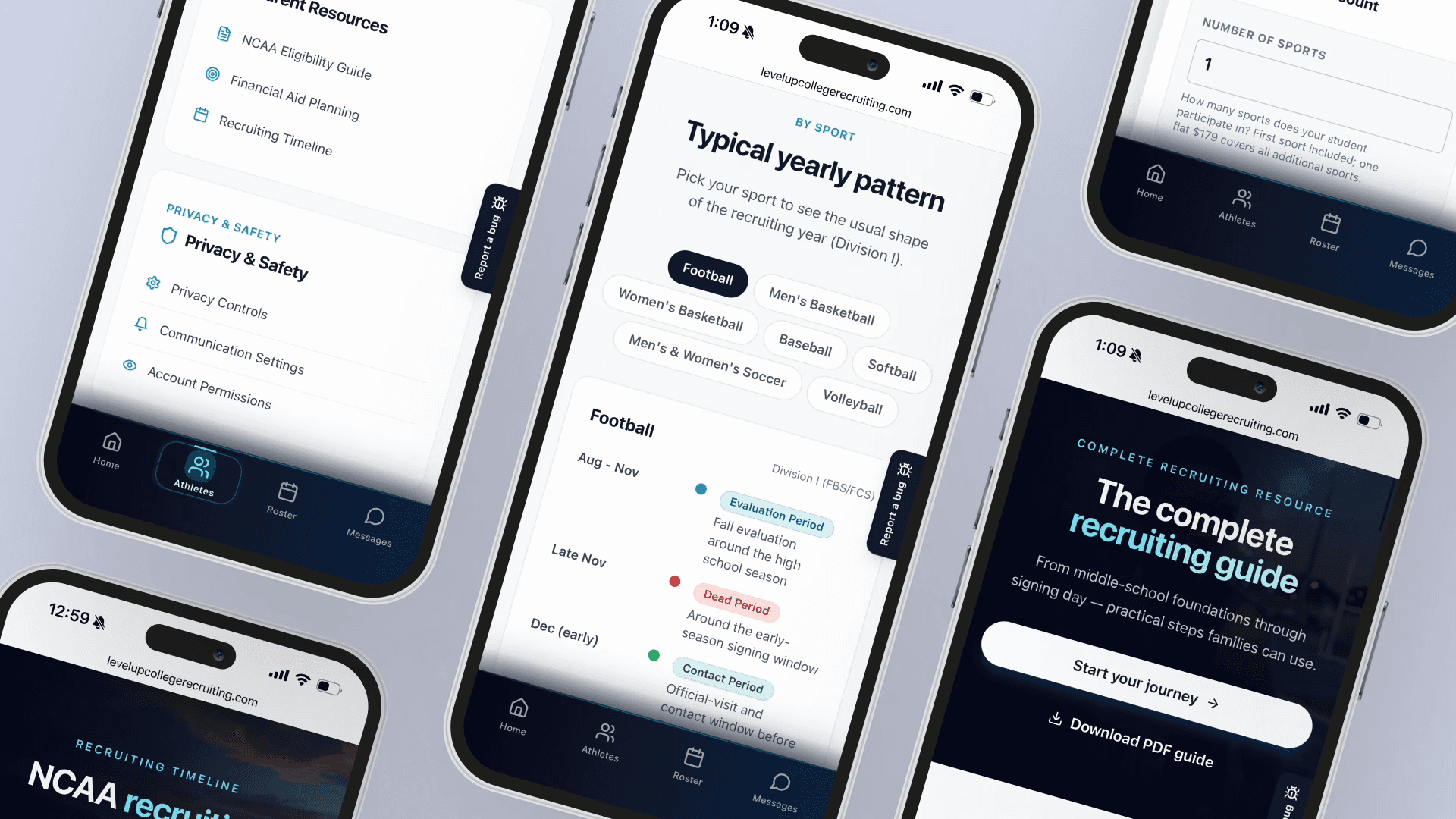
The shipped product pairs a guided recruiting home with a verified results dashboard and school discovery. Profile completion rose 34%, coach shortlisting time dropped 41%, and the component library now powers every new feature. Post-launch, support tickets about “where do I start?” effectively disappeared.
Reflection & Credits
With more time I’d have involved coaches earlier — their credibility lens reframed the whole product late in discovery. Thanks to the Level Up engineering team, our PM, and the athletes and families who let us watch them work.